

Best Walking Exoskeletons for Seniors in 2026: A Buyer's Guide
By XIO Ai Team
The Exoskeleton Boom — And Why Seniors Are Being Left Behind
Consumer exoskeletons were the breakout product category of CES 2026. Companies like Hypershell, Ascentiz, Dnsys, and WiRobotics all showcased sleek, AI-powered wearable devices that promise to make walking, hiking, and running easier. The market is projected to exceed $5 billion by 2028.
But there's a problem: almost every consumer exoskeleton on the market is designed for young, active outdoor enthusiasts. The marketing shows 30-year-olds scaling mountains. The product designs assume strong legs that just need a boost. The interfaces require smartphone apps and Bluetooth pairing.
For seniors — the population that would benefit most from walking assistance — the options have been surprisingly limited. Until now.
What Seniors Actually Need in a Walking Exoskeleton
Before comparing specific products, it's important to understand what makes a walking exoskeleton suitable for older adults. The requirements are fundamentally different from what a 35-year-old hiker needs:
- Stability over speed. Seniors need devices that improve walking confidence and reduce fall risk — not devices that make you walk faster or run uphill.
- Simplicity. One-button operation, intuitive controls, and no smartphone required for basic use. If it takes 10 minutes to set up, it won't get used.
- Lightweight and comfortable for hours. Many seniors want to wear a device all day — for shopping, errands, social activities — not just for a 2-hour hike.
- Fail-safe design. If the battery dies or the device turns off, it must not resist movement or create a tripping hazard.
- Hip-mounted preferred. Leg-mounted exoskeletons add bulk and complexity. Hip-mounted devices are easier to put on, less visible, and don't interfere with sitting.
- Gait adaptation. Seniors walk differently than young adults. The device should adapt to slower, shorter strides — not force a "normal" walking pattern.
The 2026 Walking Exoskeleton Landscape
Here's how the current consumer exoskeleton market breaks down for seniors:
Category 1: Consumer Powered Exoskeletons (C$900 – C$12,500)
These are the devices getting all the media attention. They use motors, sensors, and AI to actively assist your walking motion. The key players include:
| Device | Type | Weight | Price | Senior-Friendly? |
|---|---|---|---|---|
| XIO Walking Pro Assist | Hip-mounted | 3.2 kg | C$3,799 | ★★★★★ |
| XIO Sports Assist Robot | Hip-mounted | 1.8 kg | C$3,199 | ★★★★☆ |
| Hypershell X Go | Leg-mounted | 2.0 kg | ~C$960 | ★★★☆☆ |
| Hypershell X Pro | Leg-mounted | 2.0 kg | ~C$1,235 | ★★★☆☆ |
| Ascentiz H Ultra | Hip-mounted | ~2.5 kg | ~C$1,500 | ★★★☆☆ |
Category 2: Passive/Spring-Based Walking Aids (C$100 – C$300)
These are unpowered devices that use springs or elastic bands to store and return energy during walking. They're available on Amazon for under C$300 and include brands like KoovDem and various generic options. While affordable, they provide much less assistance than powered exoskeletons and are better suited as a supplement to physical therapy than a daily mobility solution.
Category 3: Medical Rehabilitation Exoskeletons (C$80,000+)
Devices like ReWalk and Ekso are designed for clinical rehabilitation of spinal cord injuries and stroke recovery. They're incredibly effective for their intended purpose but are far too expensive, heavy, and complex for daily consumer use. They require clinical supervision and are not relevant for most seniors looking to maintain independence.
Our Top Pick for Seniors: XIO Walking Pro Assist
The XIO Walking Pro Assist Robot is purpose-built for the exact challenges that seniors face. Here's why it stands out:
Designed for daily mobility, not adventure sports. While most consumer exoskeletons are marketed for hiking and outdoor adventures, the Walking Pro was designed from the ground up for everyday activities: walking to the store, visiting friends, attending events, and maintaining an active lifestyle. Its four adaptive modes — Daily Walk, Endurance, Stability, and Active — cover the full range of senior mobility needs.
Gait recognition that adapts to you. The Walking Pro's sensor array learns your individual walking pattern and provides assistance that matches your natural stride. This is critical for seniors, whose gait patterns differ significantly from younger adults. The device doesn't try to make you walk "normally" — it helps you walk better in your own way.
Hip-mounted simplicity. The belt-style design means you put it on like a fanny pack — no strapping devices to your legs, no complex harness systems. It takes about 30 seconds to put on and is comfortable enough to wear for hours. It's also discreet enough that most people won't notice you're wearing it.
Fail-safe engineering. If the battery runs out or you turn the device off, it doesn't resist your movement. You can walk normally without it — there's zero tripping hazard. This is a critical safety feature that some leg-mounted exoskeletons lack.
8-hour battery life. A full day of activity on a single charge. No anxiety about running out of power mid-outing.
Runner-Up: XIO Sports Assist Robot
For seniors who are still quite active — golfers, regular walkers, travelers — the XIO Sports Assist Robot is an excellent lighter-weight option at 1.8 kg. It provides less total assistance than the Walking Pro but is even more discreet and comfortable for extended wear. It's particularly popular with golfers who want to walk 18 holes without fatigue.
Budget Option: Hypershell X Go
At roughly C$960, the Hypershell X Go is the most affordable powered exoskeleton on the market. It's a solid entry point for seniors who want to try exoskeleton technology without a major investment. However, its leg-mounted design is less ideal for seniors (harder to put on, more visible, interferes with sitting), and its 6 modes are optimized for outdoor activities rather than daily mobility. It's a good device for active seniors who also hike, but not the best choice for everyday walking assistance.
What to Consider Before Buying
Before investing in a walking exoskeleton, consider these factors:
Your primary use case. If you need help with daily walking and errands, prioritize comfort, battery life, and ease of use. If you want to hike or play golf, prioritize power and terrain adaptation.
Your physical condition. Powered exoskeletons work best for people who can still walk independently but tire quickly or lack confidence. If you currently use a walker or wheelchair, consult with a healthcare provider before trying a consumer exoskeleton.
Try before you buy. Most reputable exoskeleton companies offer demos or trial periods. The XIO team offers free consultations where you can discuss your specific needs and, in many cases, arrange an in-person trial.
The Bottom Line
2026 is the year that walking exoskeletons became a real consumer product category. For seniors, the best options are hip-mounted devices designed specifically for daily mobility — not repurposed hiking gadgets. The XIO Walking Pro Assist leads the category with its senior-focused design, gait adaptation, and all-day battery life.
The technology is here. The question is no longer "will exoskeletons help seniors?" — it's "which one is right for you?" Compare all XIO products or book a free consultation to find out.
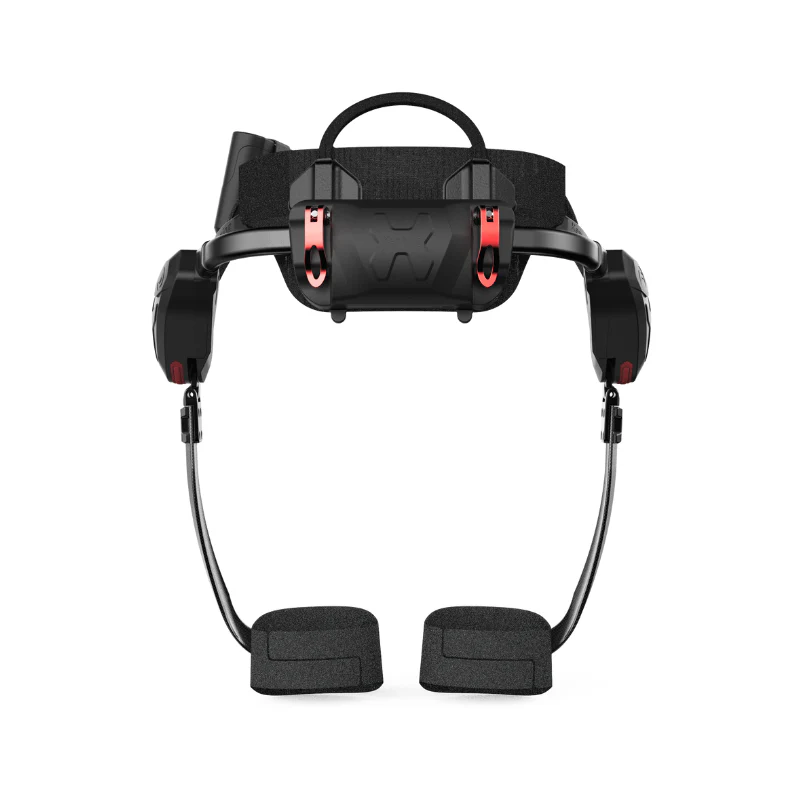
Featured Product
XIO Walking Pro Assist Robot
Advanced walking assist that helps you walk farther, stand longer, and stay independent — every single day.